team: Peter Shultz & Jiyeon Song
instructor: Philip Van Allen
date: summer, 2006
research
system concept
spec
contents
scenarios
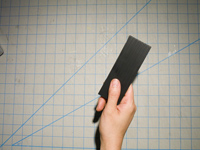
The concept for the system is that a traveler needs a one handed, simple device that communicates useful information to a person navigating a transit system and be useful on long trips on that transit system. The information the device uses is gathered from local networks, and is therefore accurate and up to date, not to mention site specific. The interface doesn't require the travelers full attention, they can simply carry it like an open cell phone and glance at it when needed.
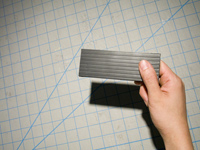
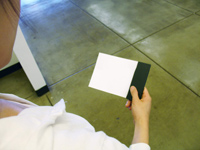
Our device has two physical configurations: Standard with only the main device active, and unrolled where a dense, quick refreshing e-paper screen is unrolled from the side to create a large screen area. The entire top surface of the main device is both a display and touch screen. The e-paper screen is not touch sensitive. The main device is aware of its orientation in space and displays different information when held in a landscape position compared to its normal portrait position.
When traveling by foot inside a large public building it is more important to have broad general directions then specific grid point to grid point directions. (It is more like hiking then driving on the freeway.) In its normal mode the device shows a compass arrow pointing the way for the traveler. When specific landmarks are needed the user turns the device horizontally to display an image of the landmark that they can then compare to their surroundings.
When using the device for entertainment, the e-paper screen is unrolled. Because the e-paper has not touch controls the main device must be used to control it. In this mode the user can also access other applications like product browsing or a larger overview map.